How We Protect Your Property — Chemicals, PSI & Safety Standards
The real, specific answers to what’s actually in our cleaning solution, how much pressure we use where, and what protects your plants, pets and property while we work.
What Actually Protects Your Property
We’re asked about safety more than almost any other topic, so here’s the plain answer: soft washing uses a diluted sodium hypochlorite (SH) solution with a surfactant, applied at low pressure with proper dwell time to do the cleaning work chemically rather than by force, and our crews wear respirators and PPE during chemical application. Plants and landscaping are pre-wetted and protected before any chemical touches the property, and every rinse follows a low-pressure standard on painted or delicate surfaces. Nothing here is proprietary or hidden — these are the standards every job follows.
What’s Actually in Our Cleaning Solution
- Diluted sodium hypochlorite (SH), the same base chemistry used to treat drinking water and pools, mixed to the lowest concentration that gets the job done
- A surfactant that helps the solution cling to vertical surfaces long enough to work instead of running straight off
- Controlled dwell time — the solution sits long enough to break down mold, mildew and algae before we rinse
- Plant and landscaping pre-treatment — vegetation is wetted down and protected before any chemical is applied
The Right Pressure for Every Surface
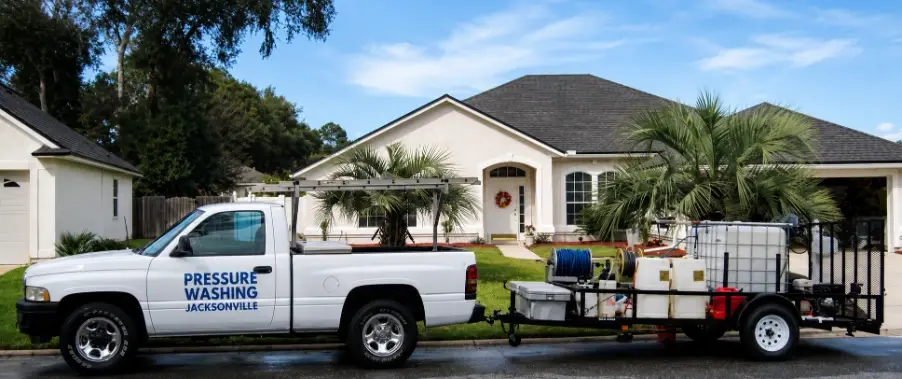
High pressure is what causes most pressure washing damage — stripped paint, forced water behind siding, etched concrete, split wood grain. We match PSI and GPM to the surface: soft-wash levels on roofs, siding, and painted surfaces; higher pressure reserved for driveways, concrete, and other surfaces built to take it. A downstream injector applies chemical at low pressure so it’s the dwell time doing the cleaning, not force.
Safety Practices We Follow On Every Job
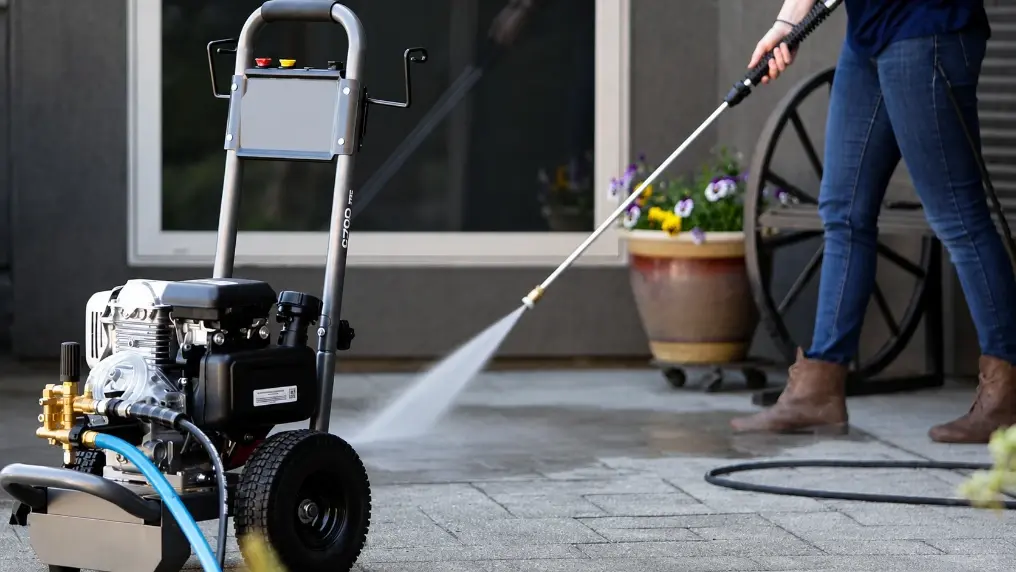
Plants Wetted Before Chemical Contact
Landscaping is pre-treated so SH solution doesn’t scorch grass or shrubs.
Respirator & PPE Worn During Mixing
Crews wear proper protective equipment whenever chemical is being handled.
Low Pressure on Painted Surfaces
PSI is matched to the surface to avoid stripping paint or forcing water intrusion.
Runoff Managed Responsibly
Wash water is directed away from storm drains where possible — see our stormwater and runoff compliance page.